
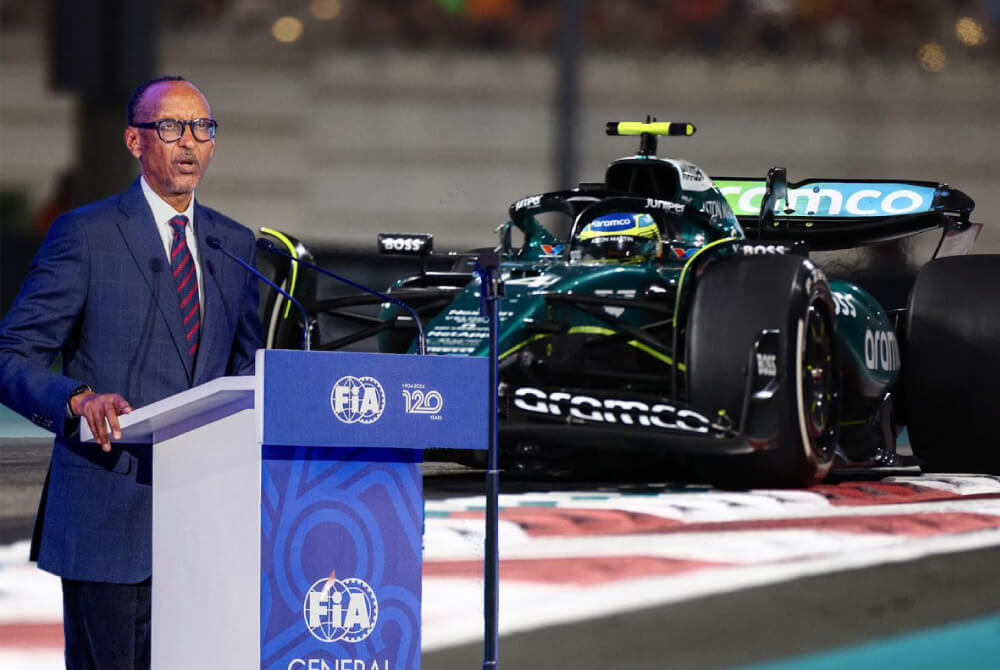
From the first Olympic event on African soil in Dakar to the first World Marathon Major in Cape Town, Formula 1’s confirmed return in Rwanda and the first World Athletics Championships in Kenya, a wave of firsts is turning sport into one of Africa’s most promising tourism engines.
On 31 October, athletes will begin arriving in Senegal for the Dakar 2026 Youth Olympic Games. They will be part of the first Olympic event ever staged on African soil.
It is the clearest sign yet of a bigger shift. Across the continent, governments and cities are using football, cycling, running, motorsport and Olympic sport to attract visitors, investment and global attention. Sports tourism in Africa is no longer a side story. It is becoming a strategy.
Two of the biggest moments are still ahead. Nairobi will host the 2029 World Athletics Championships, the first time the event comes to Africa. Rwanda will host Formula 1’s African Grand Prix from the early 2030s, the sport’s first race on the continent since 1993.
Africa’s landmark sporting firsts at a glance
2010, FIFA World Cup, South Africa: First FIFA World Cup on African soil
May 2025, Beach Soccer World Cup, Seychelles: First staged in Africa
21 to 28 September 2025, UCI Road World Championships, Kigali: First held in Africa
31 October to 13 November 2026, Youth Olympic Games, Dakar, Diamniadio and Saly: First Olympic event on African soil
23 May 2027, Sanlam Cape Town Marathon: First Abbott World Marathon Major in Africa
2027, AFCON PAMOJA, Kenya, Tanzania and Uganda: First AFCON in East Africa since 1976 and first co-hosted by three nations
October 2027, World Mountain and Trail Running Championships, Cape Town: First staged in Africa
2 October to 21 November 2027, ICC Men’s Cricket World Cup, South Africa, Zimbabwe and Namibia: Namibia’s first time as host and Africa’s first since 2003
2029, World Athletics Championships, Nairobi: First held in Africa
2030, FIFA World Cup, Morocco with Spain and Portugal: Morocco’s first and Africa’s second
Early 2030s, Formula 1 African Grand Prix, Bugesera, Rwanda: F1’s first African race since 1993
Where it started: 2010 to 2025
The 2010 FIFA World Cup in South Africa proved Africa could host the world’s biggest tournament. It took 15 years for the next wave of firsts to build.
In May 2025 Seychelles staged the first Beach Soccer World Cup held in Africa. In September 2025 Kigali hosted the first UCI Road World Championships on the continent. The UCI said 36 African countries were expected, compared with 15 at the previous edition in Zurich and Kigali was later awarded the UCI Bike City Label.
Then came AFCON. The 2025 Africa Cup of Nations in Morocco, played from 21 December 2025 to 18 January 2026, showed how far African football can travel. CAF reported preliminary figures showing a 61% rise in viewership across European, Asian and South American markets. Broadcast partners grew by 50% and new deals were signed in markets including Japan, China, South Korea and Mexico.
The final drew more than 3 million viewers in Britain and more than 4 million in Germany. Brazil recorded more than 24 million viewers. Every television shot of Marrakech, Rabat, Casablanca or Tangier works as destination marketing.
October and November 2026: Dakar puts Senegal on the Olympic map
The Dakar 2026 Youth Olympic Games open on 31 October and run until 13 November across Dakar, Diamniadio and the coastal resort of Saly. They are the first Olympic event ever staged on African soil.
Senegal gets something tourism authorities spend heavily to obtain: sustained international attention and a chance to show the destination to audiences who may never have considered visiting. The spread of venues matters too. Taking events beyond central Dakar introduces visitors to more of what Senegal offers, from the capital’s culture to its beaches.
The opportunity sits around the competition. Athletes bring families and delegations. Federations bring officials. Broadcasters bring journalists and production crews. All of them need flights, hotels, restaurants, transport and entertainment.
The challenge is turning that temporary demand into repeat visits after the closing ceremony.
May 2027: Cape Town turns running into tourism
Not every strategy needs World Cup money. Cape Town shows another model.
The Sanlam Cape Town Marathon was confirmed on 10 June 2026 as the eighth Abbott World Marathon Major and the first in Africa. It joins Tokyo, Boston, London, Sydney, Berlin, Chicago and New York, and its first race as a Major takes place on 23 May 2027.
More than 27,000 runners took part in the 2026 edition, which also saw Eliud Kipchoge run his first official marathon on African soil. Organizers plan to keep two-thirds of entries for African runners.
Marathon travelers often bring partners, families and running clubs. They book hotels, eat out and extend trips into the Winelands or along the Western Cape. Unlike a World Cup, a marathon returns every year.
2027: East Africa hosts AFCON PAMOJA
Kenya, Tanzania and Uganda will co-host AFCON PAMOJA 2027. It is the first AFCON in East Africa since Ethiopia in 1976 and the first to be shared by three countries. The 2024 African Nations Championship, co-hosted by the same three nations, served as a trial run. A tournament spread across borders turns travel between countries into part of the experience. Fans who come for football can add safaris, lakes and coastline to the trip.
October and November 2027: trail running and cricket in southern Africa
Cape Town returns to the spotlight in October 2027 with the World Mountain and Trail Running Championships, the first time Africa has staged the event.
The ICC Men’s Cricket World Cup follows from 2 October to 21 November 2027. South Africa, Zimbabwe and Namibia will share 12 venues. It is Africa’s first Cricket World Cup since 2003 and Namibia’s first time as host.
2029: Kenya and Nairobi bring the World Athletics Championships to Africa
In 2029 Nairobi will become the first African city to host the World Athletics Championships. World Athletics announced the decision on 15 September 2026, after Nairobi beat bids from London, Munich and Rome.
The fit is natural. Kenya is the second most successful nation in championship history. Nairobi has already hosted the 2017 World U18 Championships and the 2021 World U20 Championships. It will also be the highest host city in the event’s history, which could favor fast times in the sprints.
The plan is to stage the championships at Kasarani Stadium, which is being overhauled ahead of AFCON 2027 and has a renovated capacity of 48,000. That links two major events to one set of upgrades, a clear example of infrastructure that outlives the tournament.
For Kenya’s tourism sector, the draw goes beyond athletics fans. Kenya can pair the championships with safari and coastal travel, and 2027 and 2029 give it two chances to turn visitors into repeat travelers.
2030: Morocco builds towards the World Cup
Morocco will co-host the 2030 FIFA World Cup with Spain and Portugal. It will be Morocco’s first and Africa’s second World Cup.
The government says it is investing more than 190 billion dirhams (about $20 billion) in rail, roads, airports, stadiums and urban infrastructure. It plans to add about 60,000 hotel beds, roughly a fifth of current capacity, as it aims for 26 million visitors a year by 2030. Nearly 20 million tourists came in 2025, making Morocco Africa’s most visited destination.
Tourism Minister Fatim-Zahra Ammor describes the World Cup as “an accelerator, not an end in itself.”
That is the real economic case for hosting. A stadium has limited tourism value once the final whistle blows. Airports, railways and hotel capacity serve visitors for decades.
Early 2030s: Rwanda brings Formula 1 back to Africa
On 13 October 2026 Formula 1 confirmed a 10-year deal for Rwanda to host the African Grand Prix from the early 2030s. The race will be held at a new purpose-built circuit in Bugesera, about 40 kilometers south of Kigali and beside the planned new international airport.
It will be F1’s first race on the continent since the 1993 South African Grand Prix at Kyalami. The circuit still has to be built and no inaugural race date has been announced. South Africa’s sports minister has said his country still wants a race of its own.
Formula 1 says Africa has more than 100 million fans. For a destination, a Grand Prix weekend brings hospitality, corporate travel, luxury tourism and global television exposure in one package.
The event cannot be the strategy
Hosting a famous competition does not guarantee a tourism dividend. Major events are expensive. Stadiums can sit underused. Budgets can overrun. Visitors can vanish as fast as they arrived.
The strongest approach reverses the logic. Rather than building a tourism plan around an event, cities should use the event to accelerate a plan they already have. That means better airports and public transport, simpler visas, more accommodation and experiences that give visitors reasons to stay longer.
It also means linking events to places beyond the venue. A fan in Senegal can discover Saly. A runner in Cape Town can head into the Winelands. A supporter in Morocco can travel between cities on infrastructure built to last.
Frequently asked questions
What is sports tourism?
Sports tourism is travel to attend, take part in or experience a sporting event. It covers fans, athletes, officials, media and their families.
What was the first Olympic event held in Africa?
The Dakar 2026 Youth Olympic Games, running from 31 October to 13 November 2026 in Senegal, are the first Olympic event staged on African soil.
Is Formula 1 returning to Africa?
Yes. Formula 1 signed a 10-year deal on 13 October 2026 for the African Grand Prix in Rwanda, starting in the early 2030s. The circuit has yet to be built.
When is the Cape Town Marathon a World Marathon Major?
Its first race as an Abbott World Marathon Major takes place on 23 May 2027.
When are the World Athletics Championships coming to Kenya?
Nairobi hosts the 2029 edition, the first time the championships are staged in Africa. The decision was announced on 15 September 2026 and Kasarani Stadium is the planned venue.
Conclusion
Africa has never lacked sporting passion or destinations worth visiting. What it has lacked is a consistent strategy that connects the two.
Dakar, Kigali, Cape Town, Nairobi and Morocco’s World Cup build-up suggest that is changing. The real measure of success will not be how many spectators enter African stadiums. It will be how many decide to come back.
Your next big sporting adventure starts here
Schedules shift, so check with the organizers before you lock in flights and hotels. When you are ready to chase the action, Sports in Africa is the place to find sports events, venues and sign-ups across the continent. Running a race, match or tournament yourself? You can list or claim your event at no cost and put it in front of fans and travelers.
Save this guide for later and pass it to a friend who needs a reason to travel.